Psychedelics Education
Magic Mushroom Dispensary Raids in Canada: What Enforcement News Means for Psilocybin Users
Oct
Recent enforcement actions involving unlicensed cannabis retailers in Canada are a reminder that online visibility does not equal legal authorization. For people searching for magic mushrooms, shrooms online, or a magic mushroom dispensary, the distinction between a professional-looking website and a legally authorized source is especially important.
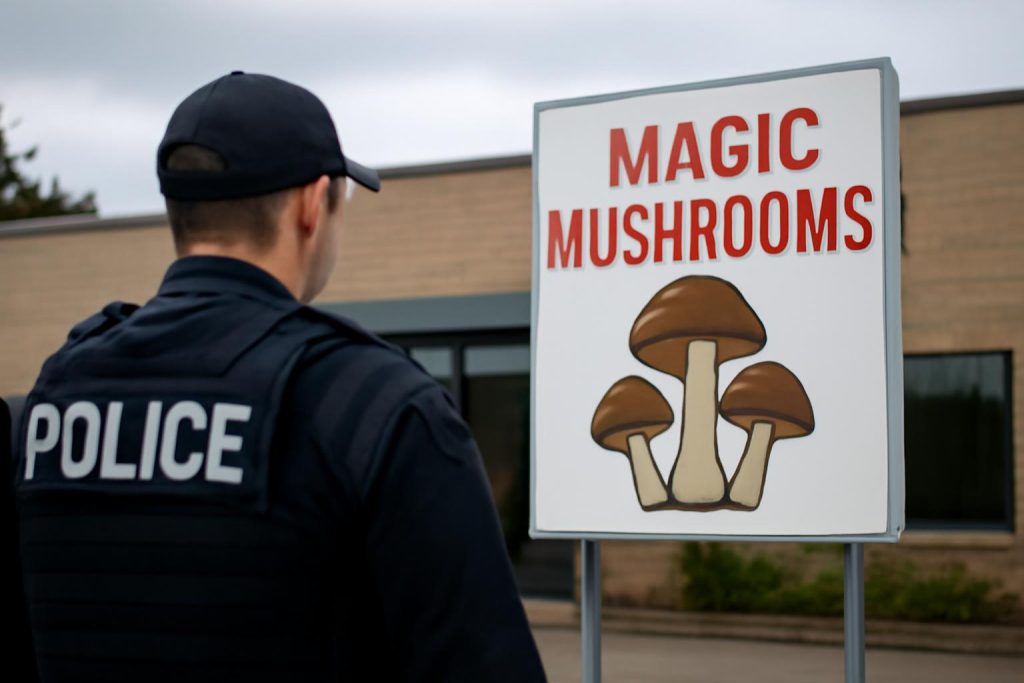
A police search or charge involving a cannabis store does not automatically mean that a specific psilocybin business has been targeted. However, it does show that Canadian authorities continue to investigate and enforce laws involving unlicensed controlled-substance retail. That matters to anyone considering raw magic mushrooms, mushroom gummies, mushroom chocolate, capsules, or other products marketed as containing psilocybin.
This guide explains what the current enforcement environment means for Canadians, how psilocybin law differs from cannabis regulation, and which safety questions deserve attention before anyone makes a decision.
Why Canadian dispensary enforcement matters to shroom users
Canada’s cannabis framework created a regulated system for authorized producers and retailers. Psilocybin mushrooms do not have the same general retail framework. Psilocybin and psilocin remain controlled substances under federal law, subject to limited exceptions such as approved research, clinical activities, or specific exemptions.
As a result, a website offering nationwide shroom delivery, magic mushroom delivery near me, or “legal” psilocybin products may not be operating within a federally authorized retail system. Marketing language, customer reviews, payment options, discreet packaging, and a polished online storefront do not establish legal approval.
The enforcement risk can involve more than the seller. Depending on the circumstances, possession, importation, production, distribution, or trafficking of controlled substances can create serious legal consequences. Laws and enforcement practices can change, so Canadians should verify current information through official government or legal channels rather than relying on social media claims or retailer assurances.
Magic mushrooms and cannabis are not regulated in the same way
One of the most common misunderstandings is assuming that a business operating openly for cannabis can also sell psilocybin products under the same rules. That assumption is incorrect.
Cannabis has an established legal framework
Under Canada’s cannabis framework, authorized businesses must meet requirements related to licensing, packaging, labelling, advertising, age restrictions, and product handling. Provincial and territorial systems also determine how legal retail operates in each jurisdiction.
Psilocybin does not have general retail authorization
There is no equivalent nationwide retail licence that broadly authorizes stores to sell magic mushrooms or psilocybin edibles to the public. Some organizations may discuss therapeutic access, research, or exemptions, but those pathways should not be confused with ordinary commercial sales.
This difference is important for anyone searching phrases such as magic mushrooms in Canada or looking for a magic mushroom shop. A category page or product listing is not evidence that the underlying activity has been approved by Health Canada or a provincial regulator.
What a raid or charge can reveal about the market
When police investigate an unlicensed drug or cannabis storefront, several broader issues become visible. These issues are relevant to online shroom marketplaces even when psilocybin is not specifically mentioned in a news report.
- Open advertising is not a legal shield. A business can be easy to find online and still be unauthorized.
- Product variety does not prove quality. A large menu of gummies, chocolate bars, capsules, coffee, or dried mushrooms does not confirm accurate contents.
- Local branding may not reflect local authorization. Terms such as “Toronto,” “Vancouver,” “Calgary,” or “nationwide delivery” can be marketing labels rather than regulatory designations.
- Payment and shipping records may create exposure. Online transactions can leave records for both businesses and customers.
- Enforcement can affect supply continuity. A site that is active today may disappear, change names, or stop responding without notice.
These points are not intended to predict a particular investigation or accuse a particular business. They are practical reminders that the appearance of normal e-commerce does not remove legal or health risks.
Product safety concerns beyond legality
Legal uncertainty and health uncertainty often overlap. In an unregulated market, consumers may have limited ability to verify what a product contains, how strong it is, or whether it has been stored correctly.
Edibles may not contain what the label suggests
Magic mushroom gummies, mushroom chocolate, and capsules can be difficult to assess visually. A label may state a total milligram amount without clearly explaining whether that figure refers to dried mushroom material, an extract, or an alleged amount of psilocybin. Those measurements are not interchangeable.
Some products marketed as “mushroom” edibles may contain non-psilocybin ingredients, undisclosed research chemicals, or inconsistent quantities. Others may contain no active psilocybin despite making strong claims. Without independent, credible testing, consumers cannot assume that a package accurately reflects its contents.
Potency can vary substantially
Even within the same species, potency can differ based on genetics, cultivation, harvest timing, drying, storage, and preparation. A product described as raw magic mushrooms may not produce the same effects as a capsule or chocolate product with the same advertised weight.
Unexpected potency is a major contributor to difficult experiences. Taking more because effects have not appeared yet can increase the risk of panic, confusion, vomiting, accidents, or prolonged psychological distress.
Contamination and storage are real concerns
Improperly dried or stored mushrooms can develop mould or lose quality. Edibles can also be affected by heat, moisture, and poor handling. Contaminants may not always be visible or detectable by smell. When laboratory testing and traceability are absent, a buyer has little reliable information about the product’s safety.
Privacy and consumer protection questions
People searching for shroom delivery online often focus on speed and discretion. Privacy deserves equal attention. Before entering personal details into any website, consider what information is collected, where it is stored, whether payment providers are involved, and whether the site clearly explains its privacy practices.
Unregulated sellers may not provide the same customer protections associated with licensed businesses. A customer may have limited recourse if an order never arrives, a payment is mishandled, a product causes harm, or personal information is exposed.
Be cautious with any service that pressures you to pay quickly, requests unusual payment methods, promises guaranteed effects, or claims that a controlled substance is “risk-free” or universally legal. Those are warning signs, not assurances of reliability.
How to reduce risk if someone has already taken psilocybin
Legal concerns should not prevent someone from seeking medical help. If a person experiences chest pain, seizures, severe agitation, extreme confusion, loss of consciousness, dangerous behaviour, difficulty breathing, or signs of a serious allergic reaction, call emergency services immediately.
For a psychologically difficult experience, move to a quiet and familiar environment. A calm, sober person can offer reassurance, reduce stimulation, remove hazards, and stay nearby. Do not drive, cycle, swim, climb, or operate machinery. Avoid combining psilocybin with alcohol, cannabis, stimulants, prescription medicines, or other psychoactive substances because combinations can be unpredictable.
Do not attempt to manage a serious emergency by taking another substance. If you are unsure what was consumed, keep the packaging or remaining product available for medical professionals, if it can be done safely.
Who should be especially cautious?
Psilocybin can intensify emotions, thoughts, sensory experiences, and perceptions of time. People with a personal or family history of psychotic disorders, mania, or bipolar disorder should speak with a qualified health professional before considering psychedelic substances. Individuals taking psychiatric or other prescription medicines should also seek medical advice about possible interactions rather than relying on online anecdotes.
Psilocybin is not a substitute for emergency mental-health care. Anyone experiencing suicidal thoughts, severe depression, or a mental-health crisis should contact emergency services or a Canadian crisis resource immediately.
Additional educational information about effects, risks, and responsible decision-making is available through the magic mushroom FAQ. Readers can also review the broader educational material on the Shrooms Bro homepage, while remembering that website information is not a replacement for medical or legal advice.
What Canadians should take away from current enforcement news
The key lesson from magic mushroom dispensary raids Canada-related discussions is not that every online listing represents the same level of risk. It is that consumers need to separate marketing from authorization, product claims from testing, and convenience from accountability.
Before making any decision, ask:
- Is the product legal to possess, sell, or distribute where I live?
- Is there credible evidence of independent testing and accurate labelling?
- Can the seller explain the ingredients, potency measurement, and manufacturing process?
- What happens if the product is contaminated, mislabelled, or never delivered?
- Am I taking medication or living with a health condition that could increase risk?
- Do I have a sober support person and a safe environment if adverse effects occur?
If the answers are unclear, that uncertainty is itself meaningful. A professional website, fast shipping promise, or large product catalogue cannot replace lawful authorization, transparent testing, or responsible health guidance.
Frequently asked questions
Are magic mushroom dispensaries legal in Canada?
Psilocybin and psilocin are controlled substances in Canada, and there is no general federal retail system authorizing stores to sell psilocybin mushrooms to the public. Limited exemptions and research pathways exist, but they should not be confused with ordinary dispensary sales.
Does a police raid on a cannabis store involve psilocybin?
Not necessarily. A report about an illegal cannabis retailer does not prove that psilocybin was involved. It does, however, demonstrate that authorities investigate unlicensed controlled-substance retail and that online visibility is not the same as legal approval.
Can mushroom gummies or chocolate be trusted if they have a detailed label?
Not automatically. In an unregulated market, labels may be incomplete, inaccurate, or inconsistent. A detailed package does not independently verify the ingredients, potency, or absence of contaminants.
What should I do if I feel unsafe after taking shrooms?
Stay with a sober, trusted person in a calm environment and avoid driving or mixing substances. Call emergency services for severe confusion, dangerous behaviour, seizures, loss of consciousness, breathing problems, chest pain, or other urgent symptoms.
Where can I learn more about psilocybin risks?
Start with reliable medical and government information, and use educational pages such as the Shrooms Bro FAQ for general background. For personal legal or medical questions, speak directly with a qualified Canadian professional.
Disclaimer: This article is for general educational and harm-reduction purposes only. It is not legal, medical, or financial advice, and it does not encourage the possession, purchase, sale, production, or distribution of controlled substances. Canadian laws and policies can change; confirm current requirements with qualified professionals and official authorities.
